UK Best Overall
EcoFlow
DELTA 3 Portable Power Station 1024Wh
- ✓1024Wh LiFePO4 — 4,000 cycles to 80%
- ✓1800W continuous, 0–70% in 30 minutes
- ✓500W solar input, best-in-class app
£499
Prices & availability may change.
Top portable power stations for UK motorhome owners and van lifers in 2026 — EcoFlow DELTA 3, Jackery 1000 v2 and Anker SOLIX compared with UK pricing and off-grid tips.
Transparency: links marked (*) are affiliate links — if you buy through them we may earn a commission at no extra cost to you. It doesn't change our recommendations.
Portable power stations have become the essential piece of kit for UK motorhome owners, van lifers and overlanders who want to camp off-grid — or just avoid tripping the site breaker when the kettle, hob and phone charger all run at once. With around 40% of UK campsites offering no electric hook-up at all, a quality LiFePO4 power station is no longer a luxury.
UK caravan and motorhome sites with hook-ups are typically limited to 10A (2,300W) or 16A (3,680W) — not enough to run an induction hob, kettle and hair dryer simultaneously. A portable power station solves this by acting as a buffer: charge it from the hook-up pitchor from solar, then draw from the station’s inverter for high-wattage bursts without tripping the site’s breaker.
For off-grid camping — wild camping, Forestry England sites, farm pitches and remote Highland spots — a 1,000Wh+ station replaces the hook-up entirely. Run a 12V compressor fridge for 24 hours, charge two laptops, keep your Starlink Mini running and still have power left for lights and a phone overnight.
For most UK motorhome owners and van lifers, the 1,000–1,100Wh class is the practical sweet spot:
UK winters are cold and damp — conditions that expose the weakness of NMC (nickel manganese cobalt) batteries. LiFePO4 (LFP) handles temperatures down to -20°C without significant capacity loss, and its cycle life (3,000–4,000 full cycles) means daily use for a decade before it drops below 80% capacity.
NMC packs from cheaper brands still appear on Amazon.co.uk at tempting prices — avoid them. At 500 cycles they’re already degrading, and in sub-10°C temperatures they can lose 20–30% of rated capacity overnight.
UK peak sun hours vary dramatically by season: 4–5 hours/day in June–August, dropping to 1–2 hours/day in November–February. For year-round van life:
EcoFlow DELTA 3 leads the 2026 UK market: 1,024Wh LiFePO4, 1,800W continuous output (enough for a UK kettle at 230V), and a 0–70% charge in just 30 minutes. The app is the best in class — real-time watt graphs, solar tracking, charge scheduling. Widely stocked at Amazon.co.uk and Argos.
Jackery Explorer 1000 v2 is the most trusted name in UK motorhome forums. The 1,070Wh LiFePO4 unit charges in under 60 minutes, pairs naturally with Jackery’s SolarSaga panels, and has a simpler interface that works well for plug-and-play motorhomers. The Practical Motorhome editors’ pick two years running.
Anker SOLIX C1000 Gen 2 hits 2,000W continuous — the highest output in its class — and recharges in 49 minutes. At around £599 it undercuts EcoFlow while matching it on LiFePO4 quality and app features.
Jackery Explorer 500 v2 is the budget entry: 512Wh with a 500W pure sine wave inverter. Enough for a weekend solo trip running lights, charging devices and keeping a small cool bag cold. At £269–449, it’s the most affordable genuine LiFePO4 option with a UK plug from a trusted brand.
EcoFlow
£499
Prices & availability may change.

Jackery
£899
Prices & availability may change.
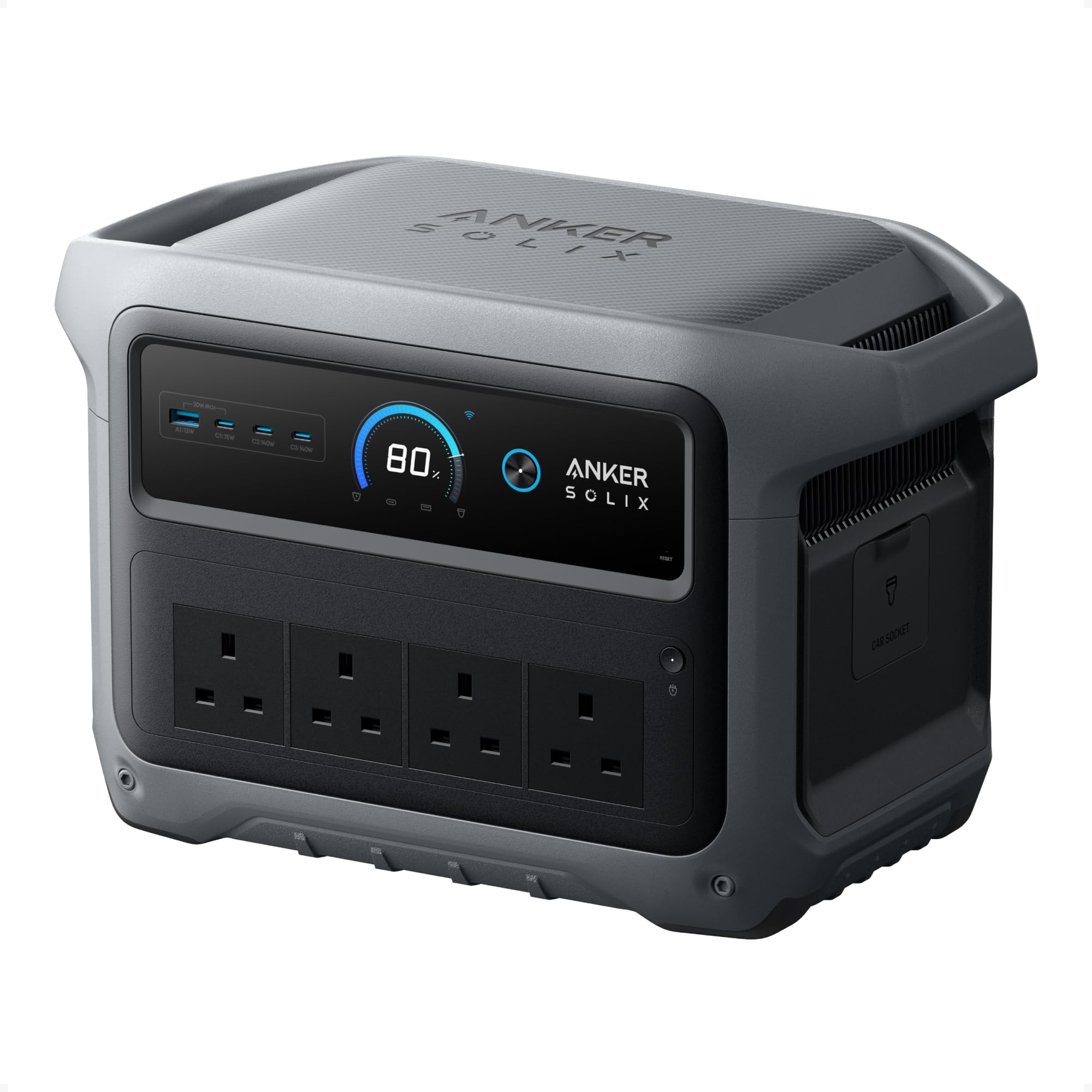
Anker
£599
Prices & availability may change.
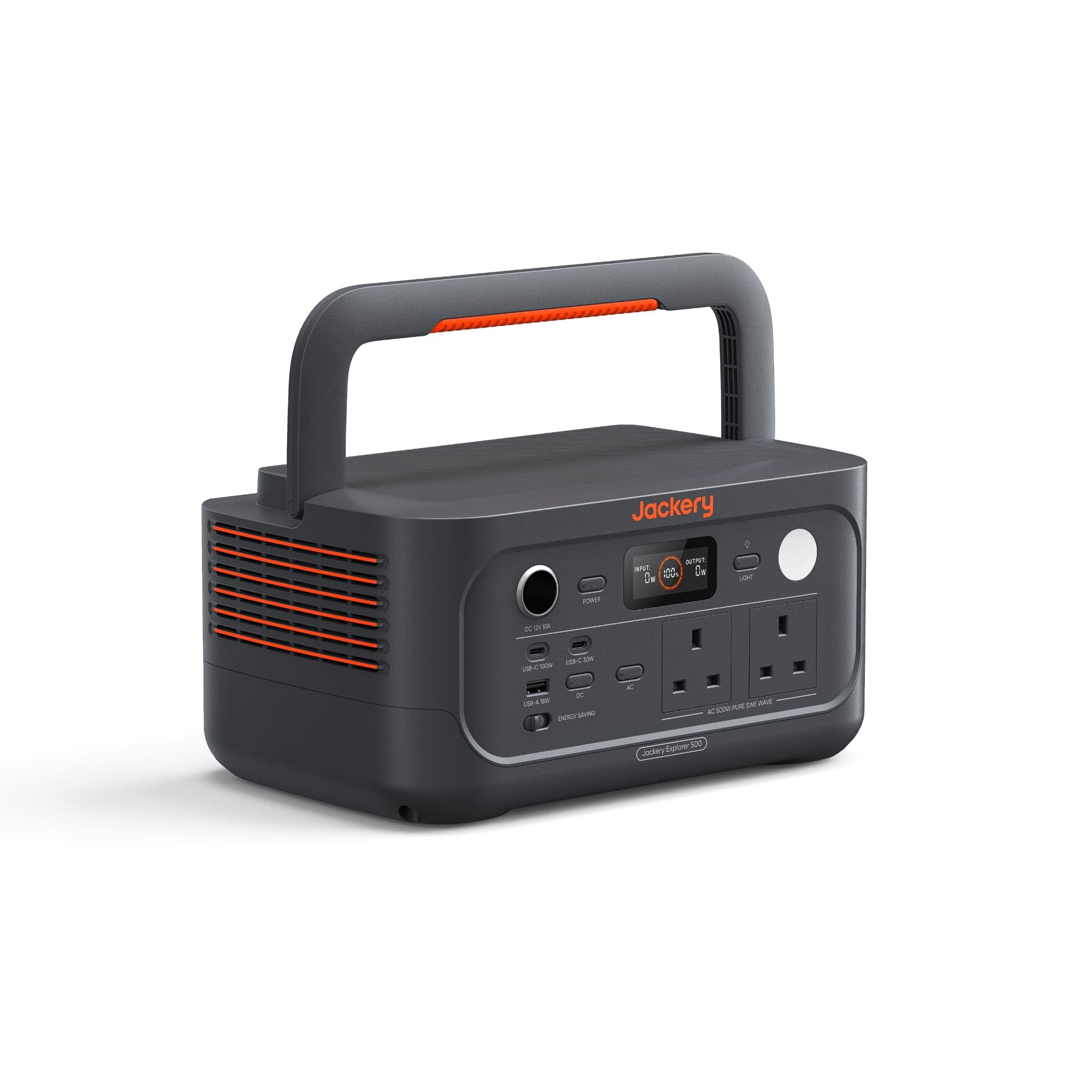
Jackery
£299
Prices & availability may change.

Bluetti
£1,299
Prices & availability may change.
A typical 12V compressor fridge (Dometic CFX3 45, Alpicool C50) draws 40–60W when running but cycles on only 30–40% of the time — roughly 350–500Wh per day in a UK summer. A 1,000Wh station runs it for 20–24 hours on one charge, enough for an overnight wild camp or a quiet-hours-only site, especially if you top up with 100–200W of solar during the day.
Yes, and it's a smart move. UK site hook-ups run at 10A (2,300W) or 16A (3,680W) — not enough for an induction hob and kettle simultaneously. A power station acts as an intelligent buffer: charge it slowly from the hook-up overnight, then run high-draw appliances from the station's inverter. This avoids tripping the site's circuit breaker and means you can still power devices if the pitch is already under load.
For nearly all UK campsites — yes. Most UK sites have strict quiet-hours rules and many prohibit generators outright. A LiFePO4 power station is completely silent, produces zero fumes (safe inside the van), and is legal everywhere. Gas generators only make sense for sustained heavy loads (a full-size diesel heater ignition, high-power tools) on private land. For fridges, charging laptops, CPAP machines and Starlink — a power station wins every time.
In summer UK conditions (4–5 peak sun hours/day), 200W of foldable panels will deliver 800–1,000Wh on a clear day — enough to fully recharge a 1kWh station. In October–March expect 1–2 peak sun hours; 200W may only deliver 200–400Wh. For winter van life in the UK, pair solar with shore power or a B2B charger from your vehicle alternator.
CE marking (the European standard) is currently accepted indefinitely in Great Britain alongside UKCA. All major brands — EcoFlow, Jackery, Anker, Bluetti — carry CE certification and ship UK-spec units with 3-pin BS 1363 plugs and 230V/50Hz inverters. Always buy from Amazon.co.uk or an authorised UK dealer, not a grey-market import.